Seminar Recap · 30 April 2026
Bridging the Theory and Practice Gap in Science Education in Bangladesh
KRTC's first volunteer-organised academic seminar on applied science education was held at Begum Rokeya University, Rangpur — bringing together teachers, students, distinguished academic guests, and KRTC's North Zone team for an open conversation on bridging the theory–practice gap in Bangladeshi science education.
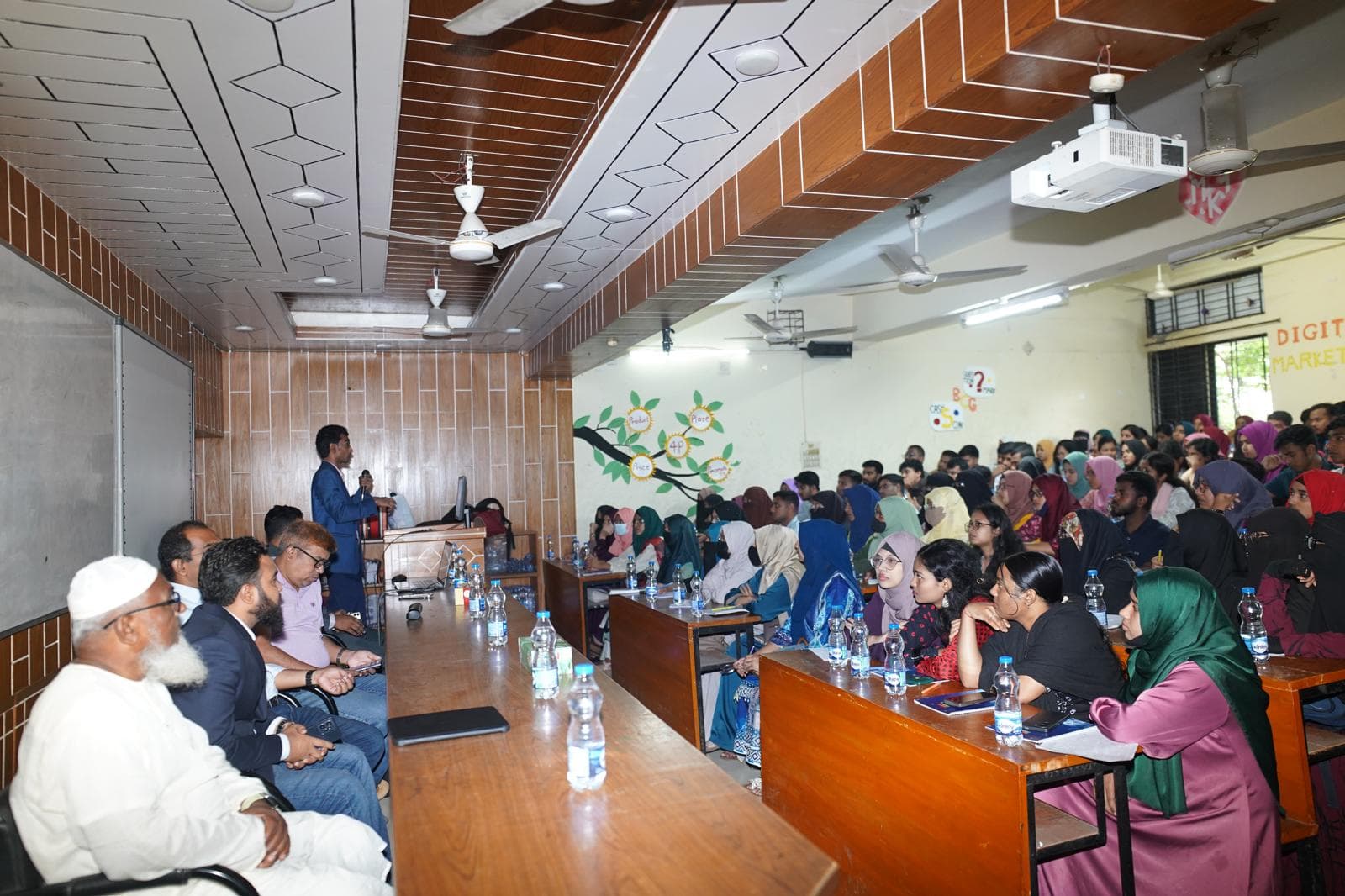
About the seminar
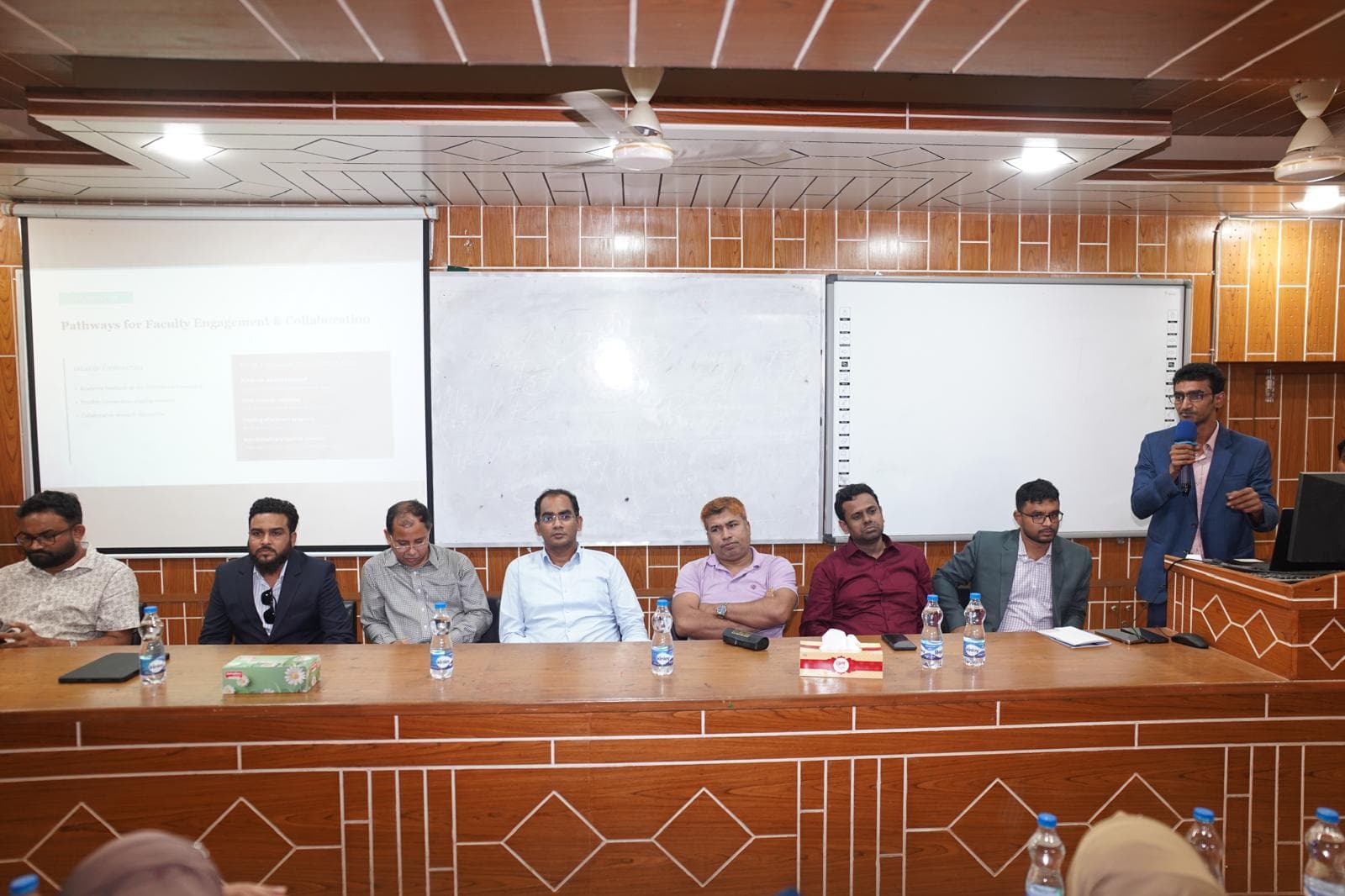
Kekuleon Research and Training Center (KRTC) organised its first academic seminar on applied science education, titled "Bridging the Theory–Practice Gap in Science Education in Bangladesh." The seminar focused on problem-based learning, laboratory-oriented training, research exposure, and integrated institutional support for developing students' practical scientific competence.
The seminar was held at Begum Rokeya University, Rangpur, as part of KRTC's North Zone academic outreach. The programme aimed to connect theory with laboratory learning, research practice, and industry-relevant scientific work for North Zone students.
The seminar was coordinated by Md. Zakaria Hossain, Founder and Chairman of KRTC and MSc Chemistry candidate at the University of Siegen, Germany. The initiative was guided by Dr. Dilip Kumar Sarkar and Dr. Shah Md. Shahan Shahriar, Associate Professors in the Department of Applied Chemistry and Chemical Engineering, University of Rajshahi.
Distinguished academic guests
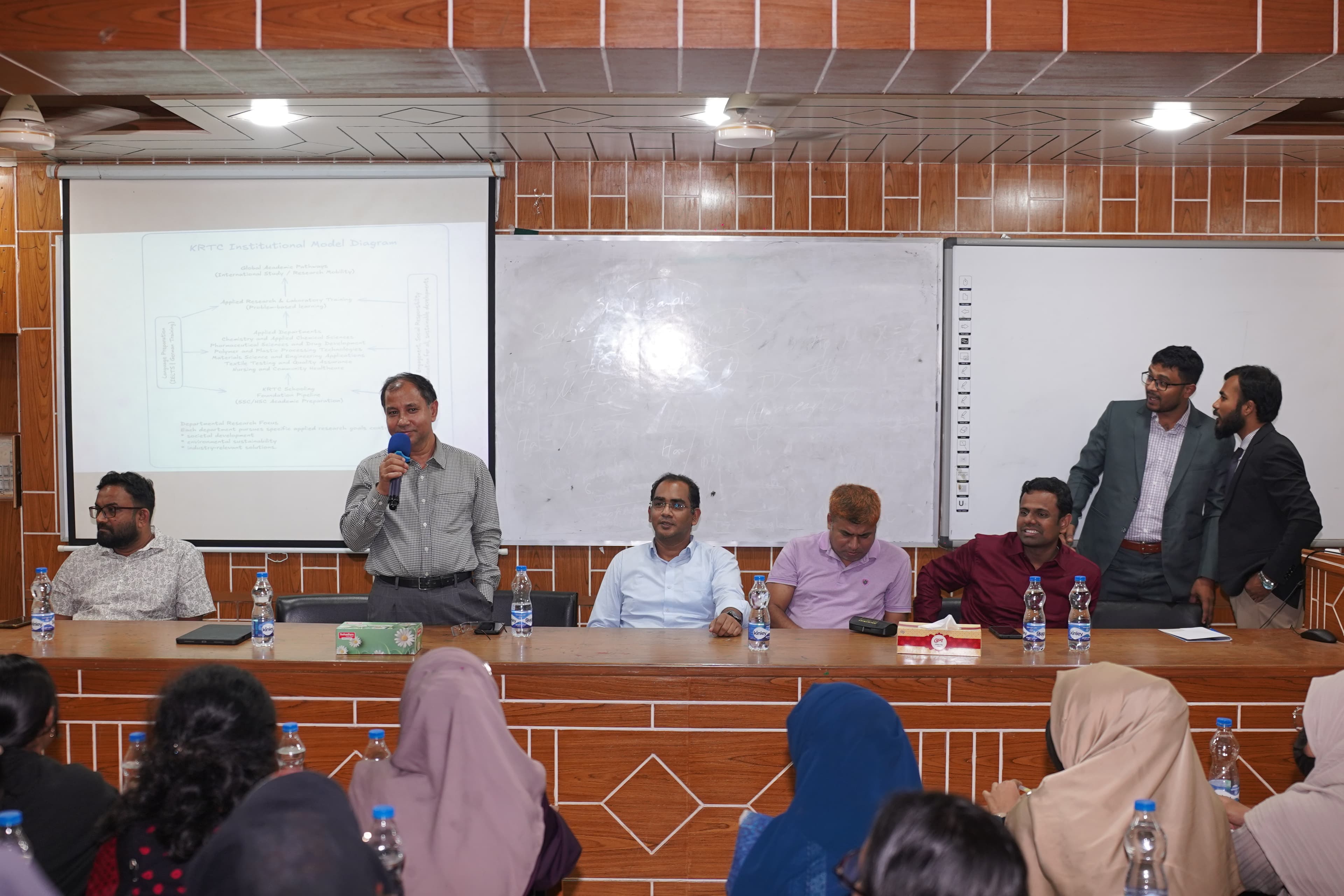
The honourable guests and participating teachers expressed clear support for the KRTC initiative and appreciated its integrated institutional model. They noted that, alongside academic and institutional support, students need this kind of coordinated platform to gain access to practical scientific competence, guided research exposure, laboratory-oriented learning, and applied STEM skills. They also recognised that theory-based education alone cannot fully prepare students for research, applied scientific careers, higher education mobility, or development-focused technical work.
From classroom to laboratory
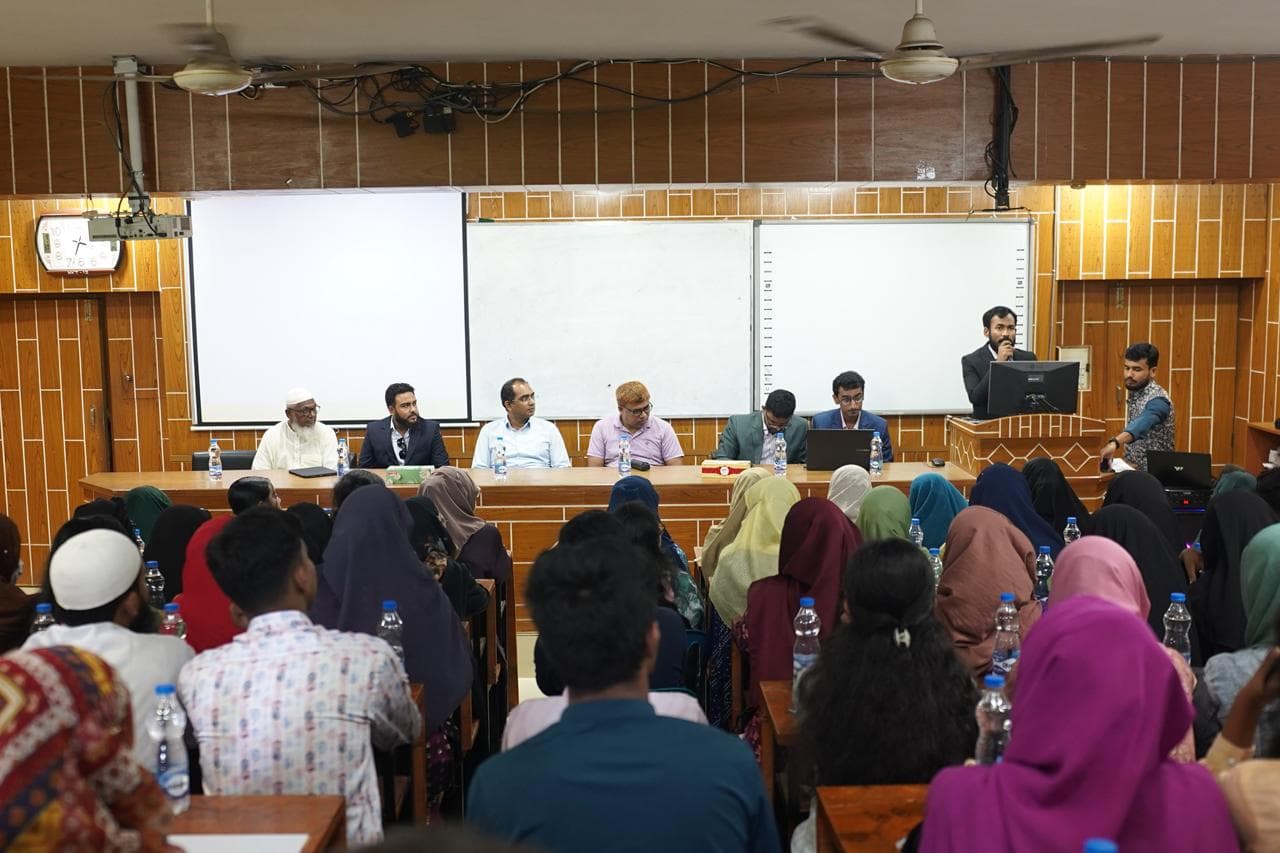
The seminar addressed several structural challenges in science education in Bangladesh. These included limited laboratory exposure, weak connection between theoretical learning and real-life application, insufficient undergraduate research opportunities, limited scientific mentoring, and barriers to higher education and research careers. KRTC's presentation identified these issues as part of a wider theory–practice gap in science education.
Two sessions, one conversation
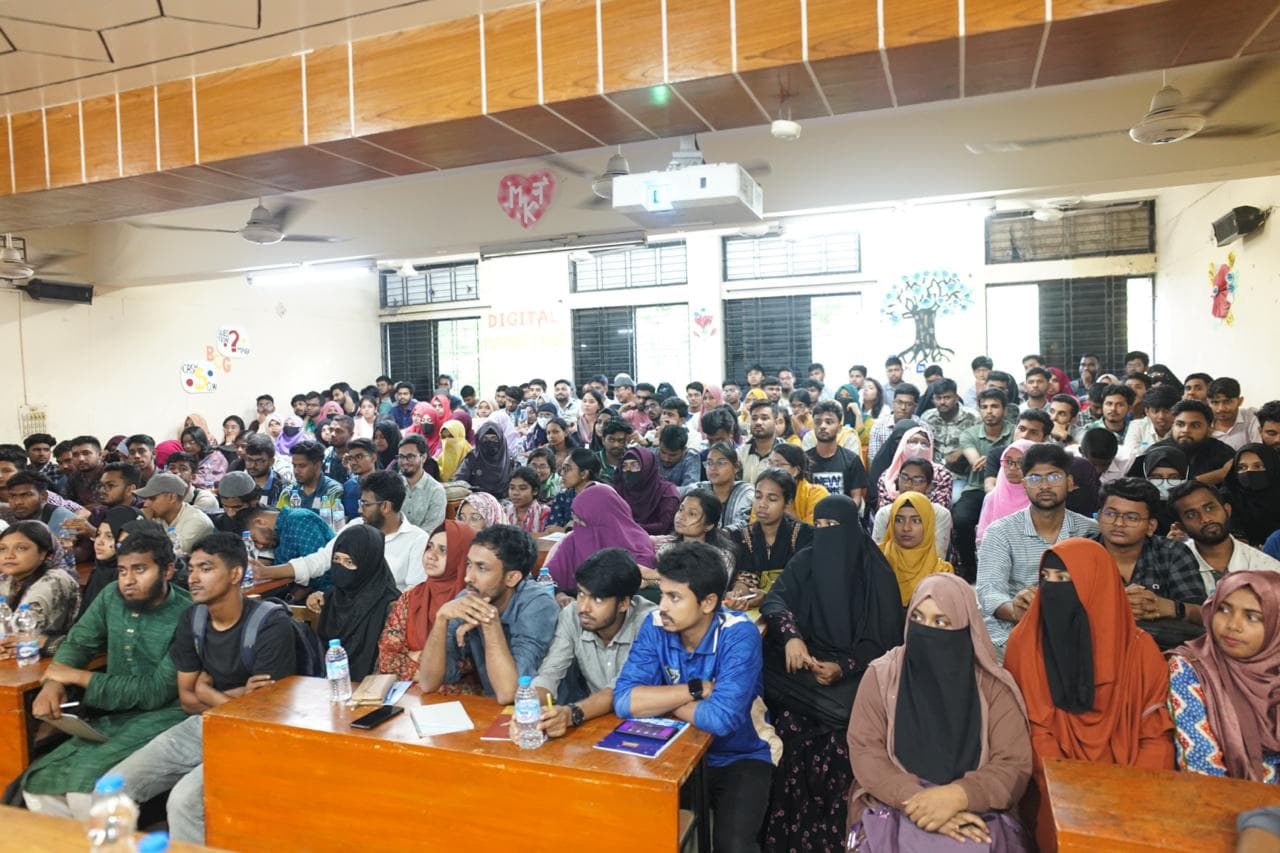
Teachers, students, researchers, distinguished academic guests, and KRTC team members joined the programme. Due to strong participation interest and limited space, the seminar was conducted in two separate sessions. The discussion created an academic platform for examining how Bangladesh's science education system can better connect classroom knowledge with practical training, research methods, technical skill development, and development-oriented scientific work.
KRTC's integrated institutional model
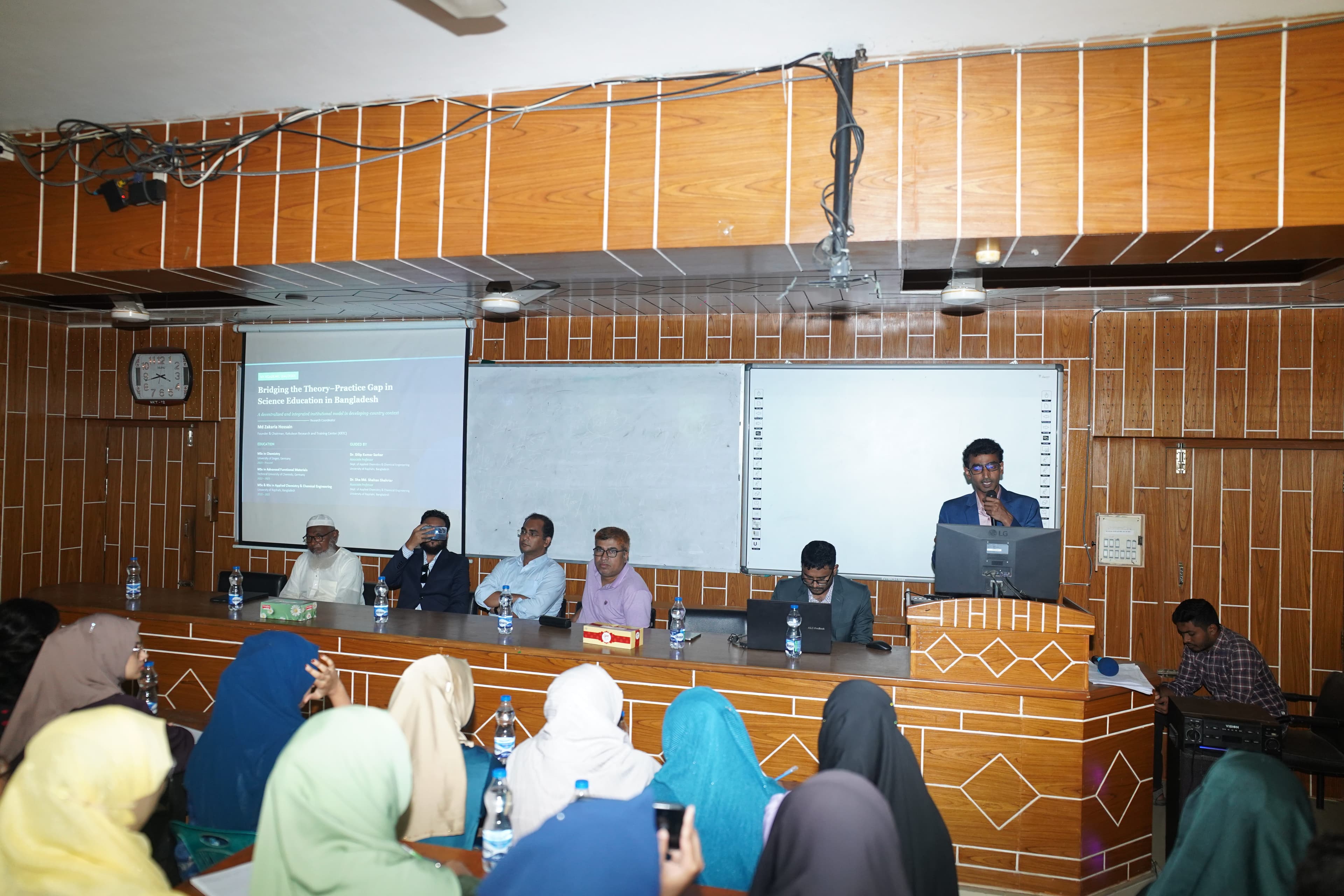
As a possible institutional response, KRTC presented its integrated institutional model for applied STEM education in developing-country contexts, with special relevance to Bangladesh. The model connects academic learning, laboratory-based practice, research engagement, institutional mentoring, capacity development, and community-oriented scientific activities — a decentralised and integrated approach designed to address the gap between theoretical education and practical scientific competence.
The guests also appreciated KRTC's broader capacity-building initiative. They recognised the value of connecting students, teachers, researchers, professionals, regional academic teams, and community-based activities within one institutional structure — linking academic preparation, applied and laboratory-based learning, research exposure, industry-relevant training, and community engagement.
KRTC North Zone team
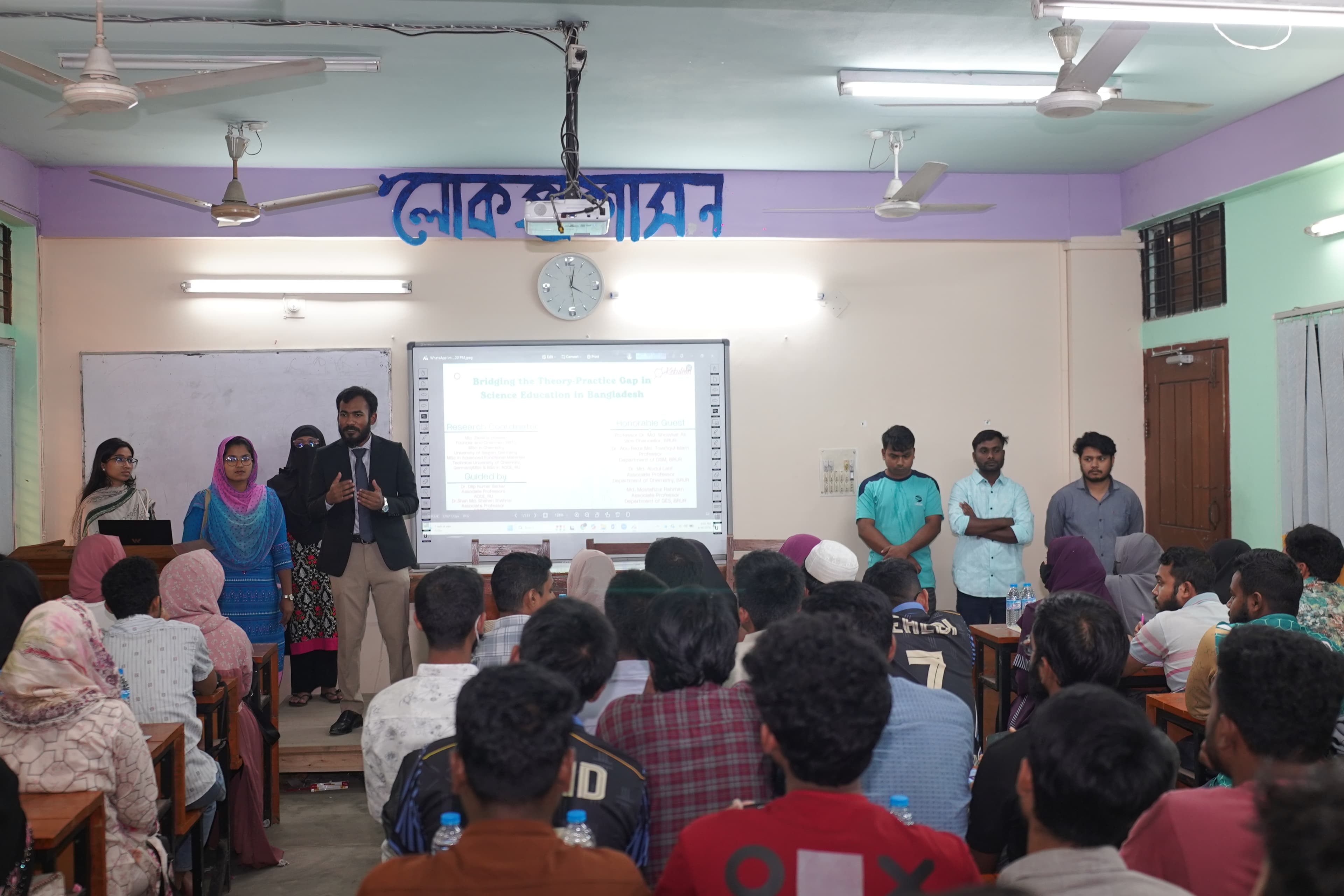
KRTC's regional academic network was also represented through its Rangpur / North Zone team, with Md. Mahmudul Hasan Abir Mia serving as North Zone Advisor at Begum Rokeya University, Rangpur. The Rangpur team supported the seminar's local coordination and student engagement throughout the day.
Project support team
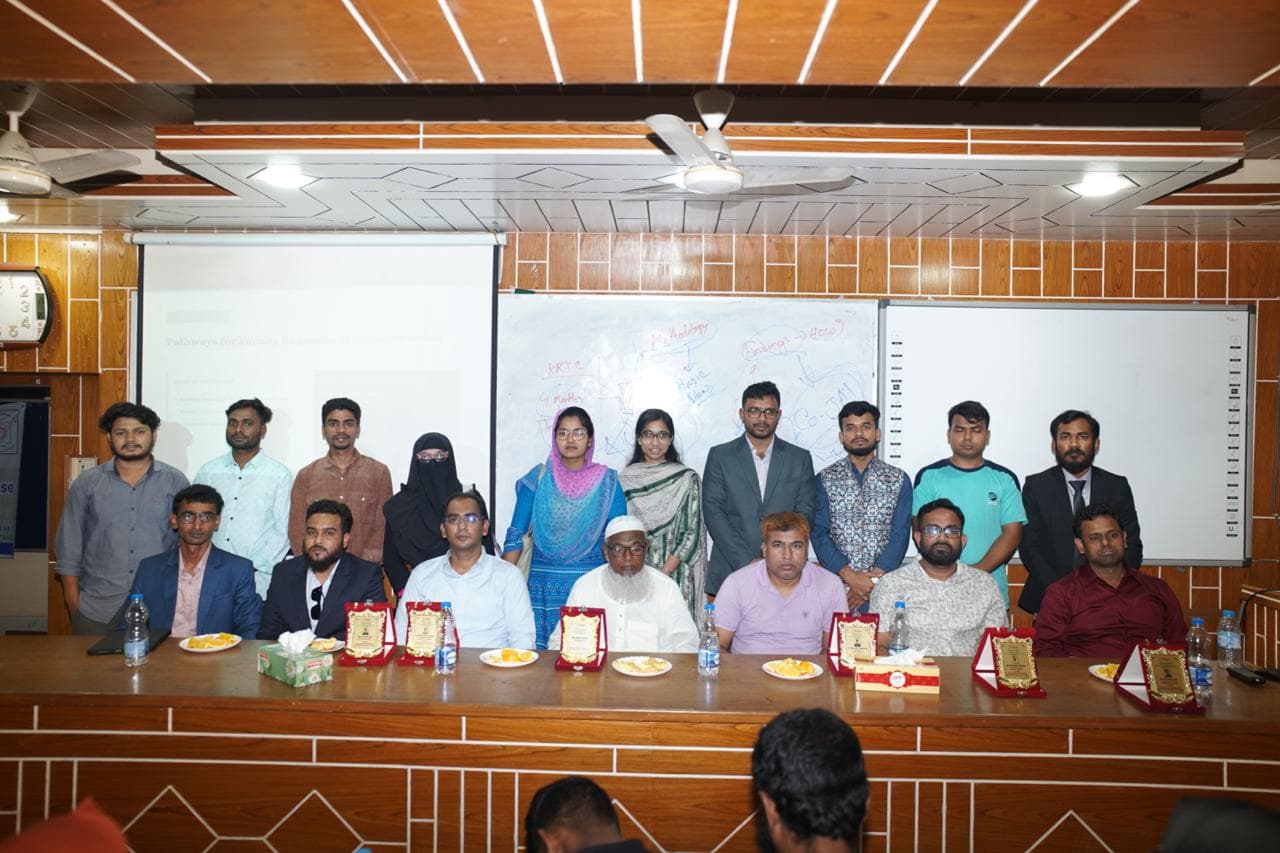
The organising and project-support team included Nazmul Haque Mitun, Department Instructor; Md. Omar Faruque, Advisor — Sustainability and Income; Md. Abdul Mojid, Managing Director, KRTC; and Mokter Hossain, Project Lawyer. Their involvement reflected the multidisciplinary support structure behind KRTC's applied science education, institutional development, and capacity-building work.
Open academic dialogue
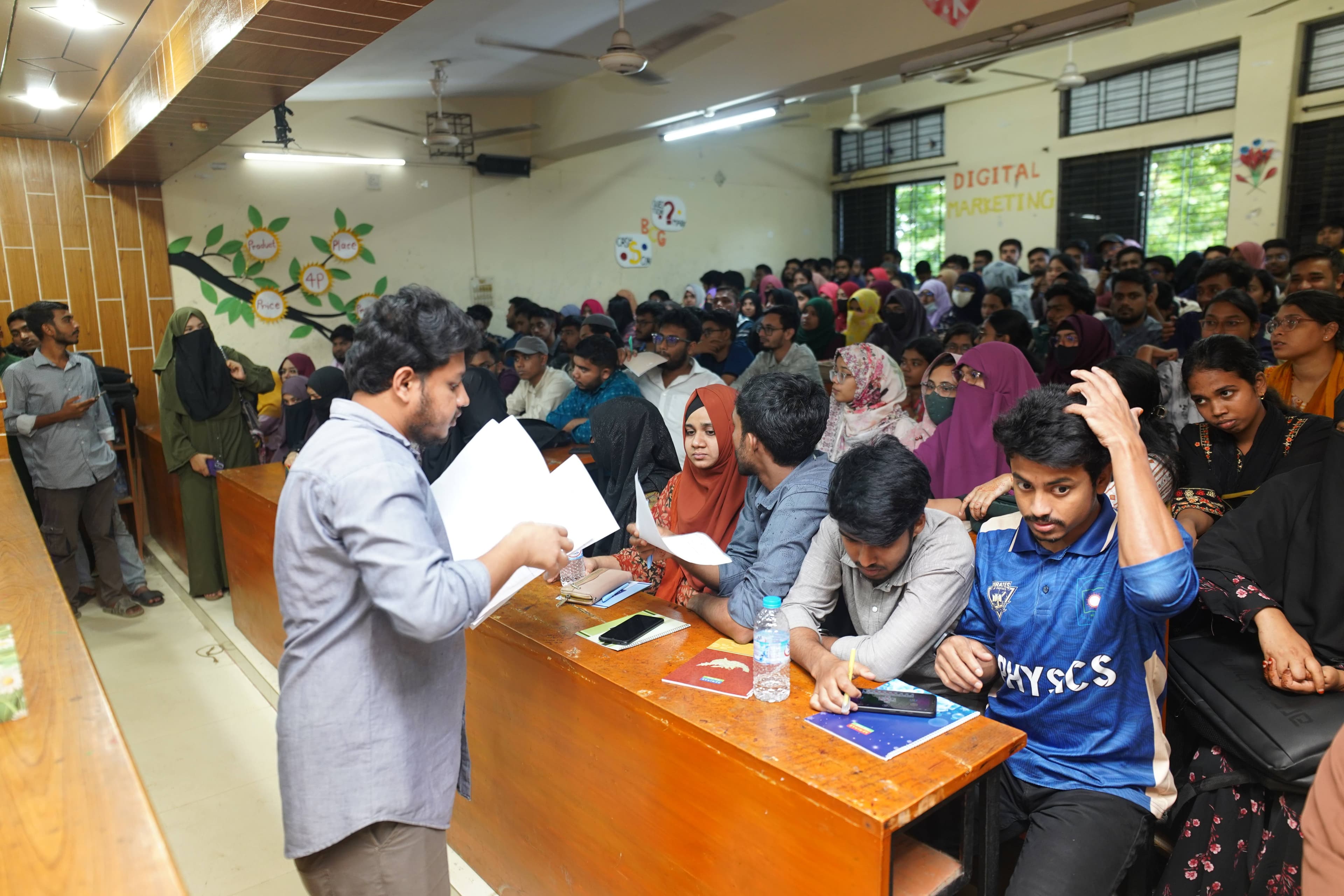
At the same time, the discussion remained academically balanced. Participants noted that this type of model should develop through long-term planning, quality control, pilot training, student feedback, research-based assessment, and cooperation with universities, development organisations, research institutions, industry professionals, and policy-focused bodies. They recommended that KRTC continue this initiative through regular seminars, teacher engagement, curriculum dialogue, student training, regional coordination, and institutional collaboration.
The seminar also highlighted KRTC's planned pathways for secondary-level students, undergraduate and master's applicants, PhD candidates, recent graduates, and professionals. The proposed activities include merit-based scholarship opportunities, affordable training, support for disadvantaged students, laboratory skill development, environmental awareness, student volunteer programmes, and community healthcare outreach.
Through this first seminar, KRTC opened an academic discussion on how decentralised and integrated training institutions can support applied science education in Bangladesh. The event concluded with a call for collaboration among universities, development organisations, academic scholars, industry professionals, and policy-focused institutions to strengthen practical science education, research culture, and technical capacity in the country.
Honourable presence
Distinguished academic guests
Honourable academic guests from Begum Rokeya University, Rangpur, who joined the seminar and supported the KRTC initiative.
Professor Dr. Md. Showkat Ali
Vice Chancellor, Begum Rokeya University, Rangpur
Dr. Abu Reza Md. Towfiqul Islam
Professor, Department of Disaster Science and Management, BRUR
Dr. Md. Abdul Latif
Associate Professor, Department of Chemistry, BRUR
Md. Mostafizur Rahman
Associate Professor, Department of Geography and Environmental Science, BRUR
Behind the scenes
Organising & project-support team
The KRTC team and partners whose multidisciplinary support made the seminar possible.
- Md. Zakaria Hossain
Founder & Chairman, KRTC — Coordinator
- Dr. Dilip Kumar Sarkar
Associate Professor, ACCE, University of Rajshahi — Guide
- Dr. Shah Md. Shahan Shahriar
Associate Professor, ACCE, University of Rajshahi — Guide
- Md. Mahmudul Hasan Abir Mia
North Zone Advisor, Begum Rokeya University, Rangpur
- Nazmul Haque Mitun
Department Instructor
- Md. Omar Faruque
Advisor — Sustainability and Income
- Md. Abdul Mojid
Managing Director, KRTC
- Mokter Hossain
Project Lawyer
Gallery
Seminar moments
Tap any photo to view it full-size. Use ← → keys or the arrows to browse.
Want to know about the next KRTC seminar?
Stay in touch — we'll announce the next North Zone seminar soon.